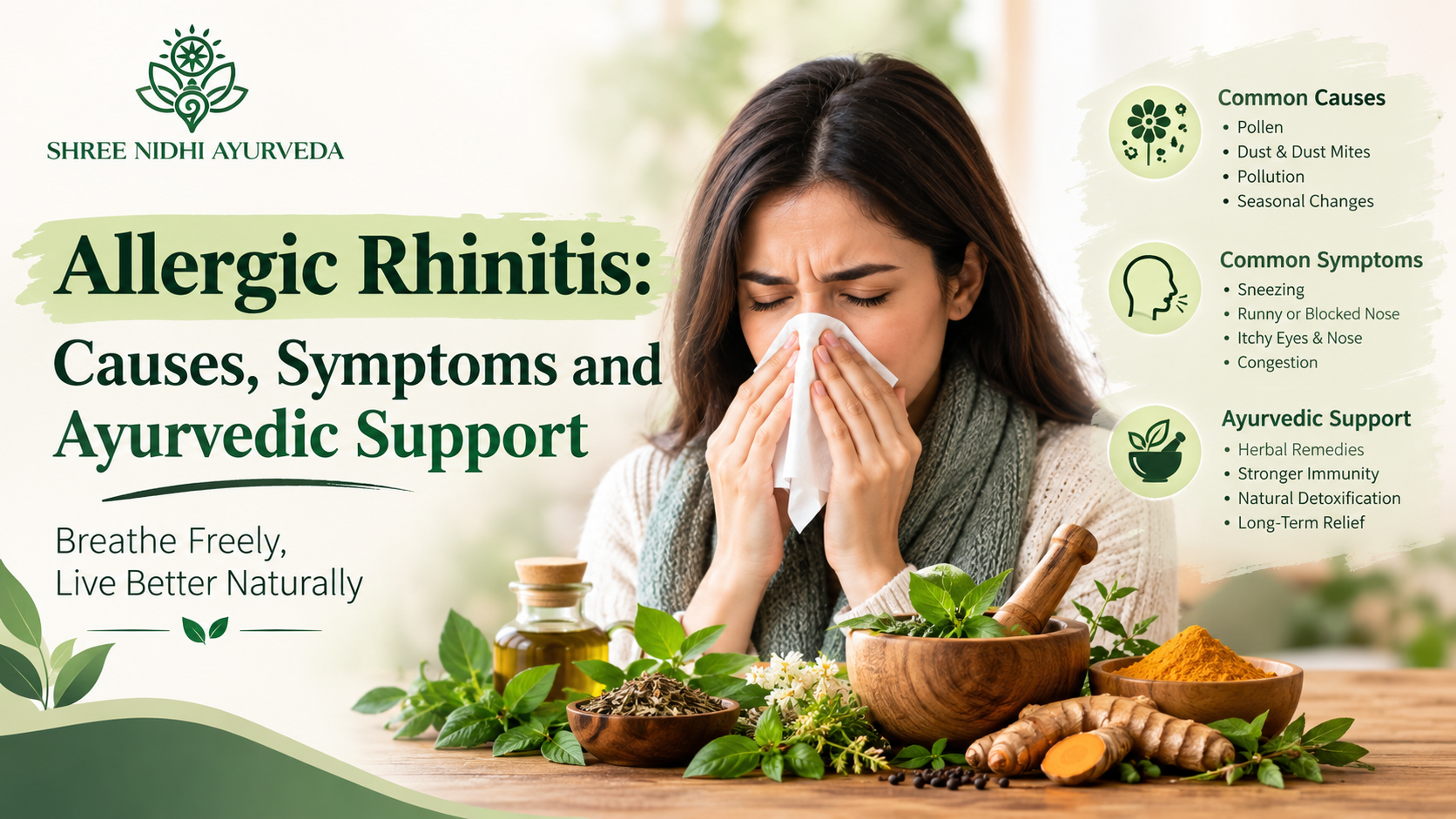
Unlike a common cold, allergic rhinitis is not caused by a virus. It occurs when the immune system reacts to substances that are usually harmless, such as pollen, dust mites, pet dander or mould.
Understanding your triggers and recognising the symptoms early can help you manage the condition more effectively. Along with appropriate medical care, Ayurveda focuses on personalised lifestyle, dietary and therapeutic approaches that may support better respiratory health.
What Is Allergic Rhinitis?
Allergic rhinitis is an inflammatory reaction inside the nose that occurs after exposure to an allergen. When a sensitive person comes into contact with a trigger, the immune system responds by releasing chemicals such as histamine. This can cause inflammation and irritation of the nasal passages.
The condition is commonly divided into two types: seasonal allergic rhinitis and perennial allergic rhinitis.
Seasonal symptoms may become more noticeable during particular times of the year when pollen levels increase. Perennial allergic rhinitis, on the other hand, can occur throughout the year because of triggers such as household dust mites, pet dander or indoor mould.
Although allergic rhinitis is generally not contagious, persistent symptoms can affect concentration, sleep quality and overall comfort.
Common Causes and Triggers of Allergic Rhinitis
Different people may react to different allergens. Identifying personal triggers is therefore an important part of managing allergic rhinitis.
Some common triggers include:
1. Dust and Dust Mites
Dust particles and microscopic dust mites commonly found in bedding, mattresses, carpets and upholstery can trigger nasal allergies in sensitive individuals.
2. Pollen
Pollen from trees, grasses and flowering plants can cause seasonal allergic symptoms, particularly during periods when pollen levels are high.
3. Pet Dander
Proteins found in the skin flakes, saliva and other particles associated with cats, dogs and other animals may trigger allergic reactions.
4. Mould
Mould spores can develop in damp or poorly ventilated areas. Exposure may contribute to nasal irritation and allergic symptoms.
5. Air Pollution and Strong Odours
Smoke, pollution, perfumes and chemical fumes may irritate the respiratory tract and can make existing nasal symptoms feel worse.
Symptoms of Allergic Rhinitis
The symptoms of allergic rhinitis can vary from one person to another. Some people experience mild symptoms, while others may have persistent nasal discomfort.
Common symptoms include:
- Frequent sneezing
- Runny nose
- Stuffy or blocked nose
- Itchy nose
- Itchy or watery eyes
- Throat irritation
- Post-nasal drip
- Coughing
- Reduced sense of smell
- Difficulty sleeping because of nasal congestion
When these symptoms continue for a long period or repeatedly return after exposure to particular triggers, it is useful to discuss them with a qualified healthcare professional.
Allergic Rhinitis vs Common Cold
Allergic rhinitis is sometimes confused with the common cold because both can cause a runny or blocked nose and sneezing.
However, there are some differences. A cold is caused by an infection, while allergic rhinitis develops as a response to allergens. Fever and general body aches are more commonly associated with infections, whereas itching of the nose and eyes is frequently associated with allergies.
Symptoms that repeatedly appear after exposure to dust, pollen or another specific trigger may indicate an allergic response rather than an ordinary cold.
How Ayurveda Approaches Allergic Rhinitis
Ayurveda traditionally considers respiratory health in relation to an individual's constitution, digestion, lifestyle and environmental exposure. A personalised approach considers factors such as Prakriti, lifestyle and medical history rather than focusing only on individual symptoms.
For someone experiencing allergic rhinitis, an Ayurvedic practitioner may consider several aspects of the person's overall routine before suggesting an appropriate plan.
Nasya Therapy
Nasya is one of the classical Ayurvedic therapies involving the administration of herbal preparations through the nasal route. It is traditionally used as part of Ayurvedic nasal and respiratory care.
Because nasal therapies are not appropriate for everyone and their suitability depends on individual circumstances, they should be performed only under guidance from a qualified Ayurvedic practitioner.
Herbal Support
Ayurvedic care may include traditionally used herbs or herbal formulations depending on an individual's needs. The purpose of such support may be to promote respiratory comfort and overall wellness.
It is important not to self-prescribe herbal preparations simply because they are described as natural. Some herbs can interact with medicines or may not be suitable for particular health conditions.
Diet and Lifestyle Guidance
Daily habits can also play an important role in managing recurring nasal discomfort. An Ayurvedic consultation may consider food habits, sleep, hydration, activity levels and environmental exposure when developing an individualised routine.
The goal is to create practical habits that can be maintained consistently rather than relying only on short-term measures.
Simple Lifestyle Tips for Allergic Rhinitis
Along with professional guidance, some everyday measures may help reduce exposure to common triggers:
- Keep bedrooms clean and well ventilated.
- Wash bedding regularly, particularly if dust is a known trigger.
- Reduce dust accumulation on carpets, curtains and upholstered furniture.
- Avoid cigarette smoke and unnecessary exposure to strong chemical fumes.
- Keep indoor areas dry to reduce the possibility of mould growth.
- Stay adequately hydrated.
- Pay attention to situations or environments that repeatedly trigger symptoms.
- Maintain a regular sleep routine.
- Follow a balanced diet suited to your individual needs.
These measures do not eliminate allergies, but reducing exposure to known triggers can be useful as part of an overall management plan.
When Should You Consult a Professional?
Occasional sneezing or a runny nose may not always require professional attention. However, persistent or recurring symptoms should not simply be ignored.
Consider consulting a healthcare professional if nasal congestion, sneezing, itching or post-nasal drip continues for several weeks, repeatedly affects your sleep or interferes with your normal activities.
You should also seek appropriate medical evaluation if symptoms are severe, breathing becomes difficult, or you develop other concerning symptoms.
Ayurveda and Personalised Respiratory Care
Every person's experience with allergic rhinitis can be different. The trigger, severity, lifestyle and response to different approaches may vary considerably.
A personalised Ayurvedic consultation can help assess these factors and determine whether therapies such as Nasya, dietary guidance, lifestyle changes or other Ayurvedic approaches are appropriate.
Ayurvedic care should be viewed as part of informed healthcare rather than as a replacement for necessary diagnosis or emergency treatment.
Conclusion
Allergic rhinitis can be frustrating, especially when sneezing, congestion and nasal irritation become a regular part of daily life. Understanding your triggers, reducing unnecessary exposure and maintaining healthy daily habits can help you manage the condition more effectively.
Ayurveda takes a personalised approach by considering an individual's constitution, lifestyle and overall health. With guidance from a qualified practitioner, approaches such as lifestyle modification and appropriate Ayurvedic therapies may be considered as part of a broader plan for respiratory wellness.
If your allergic rhinitis symptoms are persistent or affecting your quality of life, professional evaluation can help you understand the underlying problem and choose an appropriate course of care.