Although psoriasis is often mistaken for a simple skin allergy or infection, it is a complex condition associated with the immune system. Understanding its causes, recognising the early signs and choosing the right treatment can help people manage their symptoms more confidently.
At Shree Nidhi Ayurveda, we believe that understanding your health is an important step towards making informed decisions about care. In this article, we explore psoriasis, its common symptoms, possible triggers, everyday skin care and how Ayurveda may form part of a personalised supportive wellness plan.
What Is Psoriasis?
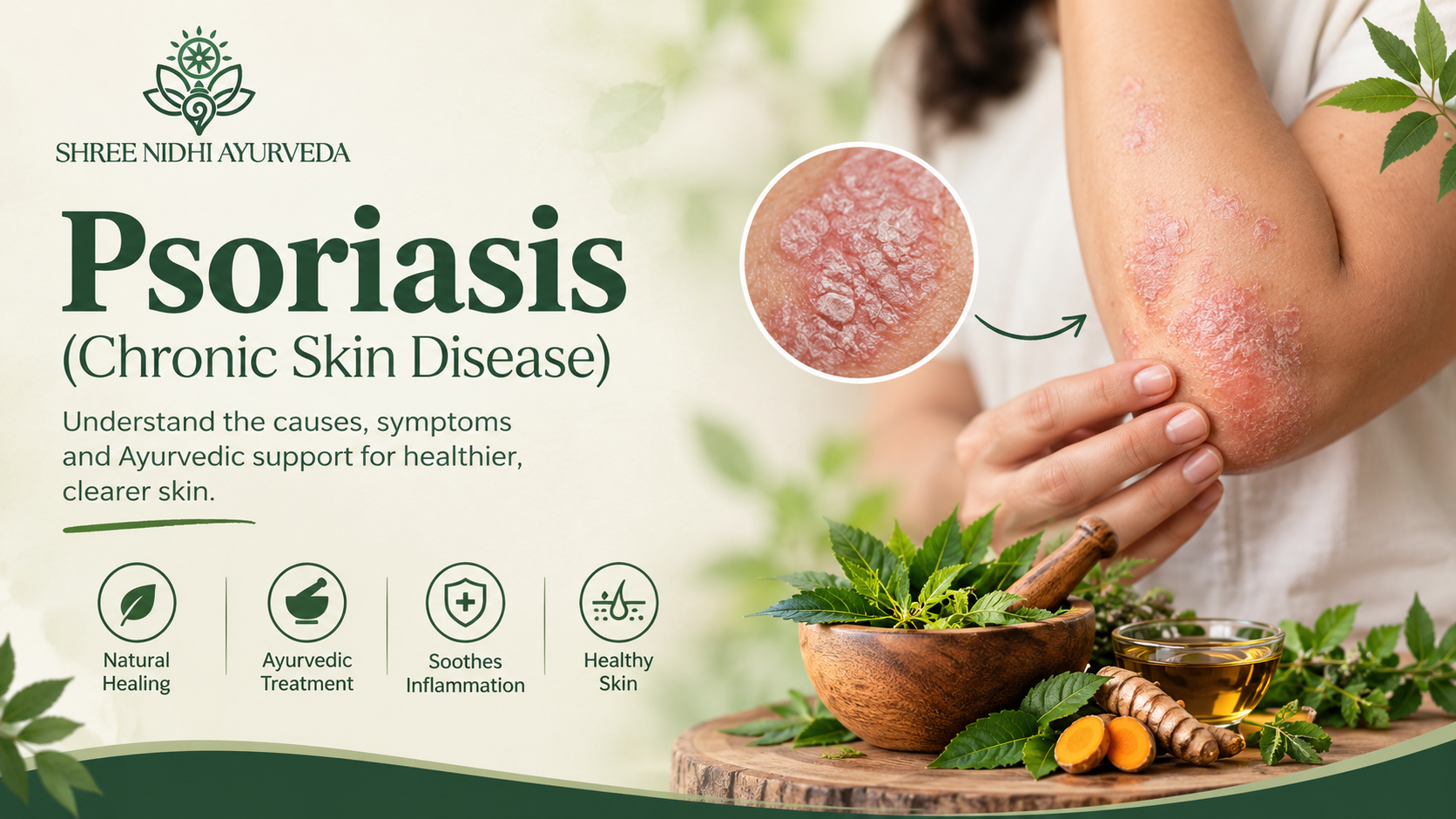
Psoriasis is a chronic inflammatory skin disease in which skin cells build up faster than usual, leading to thickened, dry and scaly patches. These patches may appear red, pink, purple, grey or darker than the surrounding skin, depending on the person's skin tone.
The condition commonly affects the scalp, elbows, knees and lower back, although it can develop on other parts of the body, including the hands, feet and nails.
Psoriasis usually follows a pattern of flare-ups and periods when symptoms become less noticeable. It is not contagious, so it cannot spread through touching, sharing food or being around someone who has the condition.
There is currently no permanent cure for psoriasis, but appropriate treatment can help control symptoms, reduce discomfort and improve quality of life.
Common Symptoms of Psoriasis
The symptoms of psoriasis can vary from person to person. Some people experience a few small patches, while others develop more extensive areas of affected skin.
Common psoriasis symptoms include:
- Dry, scaly skin: Thick patches may develop with a white or silvery coating.
- Persistent itching: The affected areas may itch and become uncomfortable throughout the day.
- Redness and inflammation: Skin may appear inflamed, irritated or discoloured.
- Cracked skin: Severe dryness can cause cracks that may bleed or become painful.
- Scalp scaling: Psoriasis on the scalp may resemble stubborn dandruff and can extend beyond the hairline.
- Nail changes: Nails may develop small dents, unusual discolouration, thickening or separation from the nail bed.
Repeated scratching can further irritate the skin. If you notice persistent scaling, unexplained skin changes or recurring patches, consult a qualified dermatologist for an accurate diagnosis.
What Causes Psoriasis?
The exact cause of psoriasis is not fully understood. However, researchers know that the immune system plays an important role. In people with psoriasis, immune activity affects the normal skin-cell renewal process, causing cells to accumulate more quickly than usual.
Several factors may increase the likelihood of developing psoriasis or trigger a flare-up.
1. Genetic Factors
Psoriasis can run in families. Having a close relative with the condition may increase your risk, although not everyone with a family history will develop it.
2. Stress and Emotional Pressure
Ongoing stress may trigger or worsen psoriasis flare-ups in some people. Although stress is not the sole cause, managing it can be a useful part of an overall care routine.
3. Infections
Certain infections, particularly streptococcal throat infections, can trigger a type of psoriasis known as guttate psoriasis in susceptible individuals.
4. Skin Injuries
Cuts, scratches, insect bites and sunburn may trigger new patches in affected individuals. This response is sometimes called the Koebner phenomenon.
5. Lifestyle and Environmental Factors
Smoking, excess alcohol consumption, some medicines and other individual factors may contribute to flare-ups. Triggers differ from person to person, so keeping track of symptoms and possible contributing factors can be helpful.
Different Types of Psoriasis
Psoriasis can appear in several forms, each with its own characteristics.
Plaque Psoriasis
Plaque psoriasis is the most common type. It produces raised, scaly patches that often appear on the elbows, knees, scalp and lower back.
Guttate Psoriasis
This type causes multiple small, drop-shaped spots on the skin. It may develop after an infection, particularly in children and young adults.
Scalp Psoriasis
Scalp psoriasis causes thick scales, itching and patches along the scalp or hairline. It may sometimes be confused with ordinary dandruff, but its appearance and severity can differ.
Inverse Psoriasis
Inverse psoriasis develops in skin folds, such as the armpits, groin or beneath the breasts. These areas may appear smooth and inflamed rather than heavily scaly.
Pustular and Erythrodermic Psoriasis
These are less common but potentially serious forms. Pustular psoriasis can produce pus-filled bumps, while erythrodermic psoriasis may cause widespread inflammation and peeling. Both require prompt medical assessment, particularly when accompanied by fever or feeling unwell.
How Is Psoriasis Diagnosed?
A doctor or dermatologist usually diagnoses psoriasis by examining the skin, scalp and nails and asking about your symptoms and medical history. A skin biopsy may occasionally be needed if the diagnosis is uncertain.
Early assessment is important because psoriasis can resemble eczema, fungal infections and other skin conditions. Using an unsuitable cream or self-medicating without a diagnosis may delay appropriate treatment.
People with psoriasis should also pay attention to recurring joint pain, swelling or morning stiffness, as these symptoms may indicate psoriatic arthritis, an inflammatory condition that requires medical evaluation.
Conventional Treatment Options for Psoriasis
Treatment depends on the type of psoriasis, the affected areas and the severity of symptoms. A dermatologist may recommend one treatment or a combination of approaches.
Common options include:
- Moisturisers and emollients to reduce dryness and support the skin barrier.
- Prescription topical medicines, including corticosteroids or vitamin D analogues, to help control inflammation and scaling.
- Phototherapy, which uses medically supervised ultraviolet light for selected cases.
- Oral medicines or biologic treatments for more extensive or difficult-to-control psoriasis.
Treatment should always be individualised. Do not stop prescribed medicines or replace them with herbal products without discussing the change with your treating doctor.
The Ayurvedic Approach to Psoriasis
Ayurveda takes a broader view of health, considering individual constitution, daily habits, diet and overall well-being. In traditional Ayurvedic practice, certain skin conditions are discussed under concepts such as Kushtha. However, these traditional classifications should not be treated as an exact equivalent of a modern psoriasis diagnosis.
An Ayurvedic approach to psoriasis may involve an individual assessment, dietary guidance, lifestyle recommendations and selected therapies according to the practitioner's evaluation.
At Shree Nidhi Ayurveda, people interested in Ayurvedic care should discuss their symptoms, medical history, current medicines and treatment goals with a qualified practitioner. Any recommended plan should be tailored to the individual rather than based on a one-size-fits-all remedy.
It is important to understand that evidence for Ayurvedic treatments specifically for psoriasis remains limited. Ayurveda should not be presented as a guaranteed cure, and supportive care should not delay established medical treatment.
Some herbal products may irritate the skin, interact with medicines or contain undisclosed ingredients. Avoid applying unfamiliar preparations to inflamed or broken skin without professional advice.
Everyday Skin Care Tips for Psoriasis
A consistent skin care routine can help reduce dryness and avoid unnecessary irritation.
Keep Your Skin Moisturised
Apply a gentle, fragrance-free moisturiser regularly, especially after bathing. Well-moisturised skin may feel less dry and uncomfortable.
Choose Gentle Cleansing Products
Use mild cleansers and lukewarm water. Very hot showers, harsh soaps and vigorous scrubbing may aggravate sensitive skin.
Avoid Scratching and Picking
Scratching can injure the skin and may worsen existing patches. Keep your nails short and seek advice if itching interferes with sleep or daily activities.
Identify Your Personal Triggers
Maintain a simple diary of flare-ups, stress, illnesses, skin products and other possible triggers. This may help you recognise patterns to discuss with your healthcare professional.
Support Your General Health
Aim for regular physical activity, adequate sleep, balanced meals and stress-management practices that suit your lifestyle. Avoid smoking and limit alcohol consumption.
These habits can support general well-being, but they do not replace psoriasis treatment.
When Should You Consult a Doctor?
Seek medical advice if your skin patches persist, spread, become painful or do not improve with basic skin care. You should also arrange an assessment if symptoms interfere with sleep or affect your confidence and emotional well-being.
Seek urgent medical attention if you develop widespread redness with pus-filled bumps, rapidly worsening skin symptoms, fever or significant illness. These signs may indicate a serious form of psoriasis or another condition requiring immediate treatment.
Conclusion
Living with psoriasis can be challenging, especially when symptoms return unexpectedly. However, understanding the condition, recognising possible triggers and following a suitable care plan can make it easier to manage.
A combination of dermatologist-guided treatment, gentle skin care and healthy daily habits can help many people control their symptoms. Those interested in Ayurveda may explore it as a complementary approach after discussing its suitability and safety with qualified healthcare professionals.
At Shree Nidhi Ayurveda, informed decisions and individualised guidance are important when exploring traditional wellness approaches. Remember that psoriasis management is a long-term process, and the right plan should prioritise your skin health, safety and overall quality of life.