
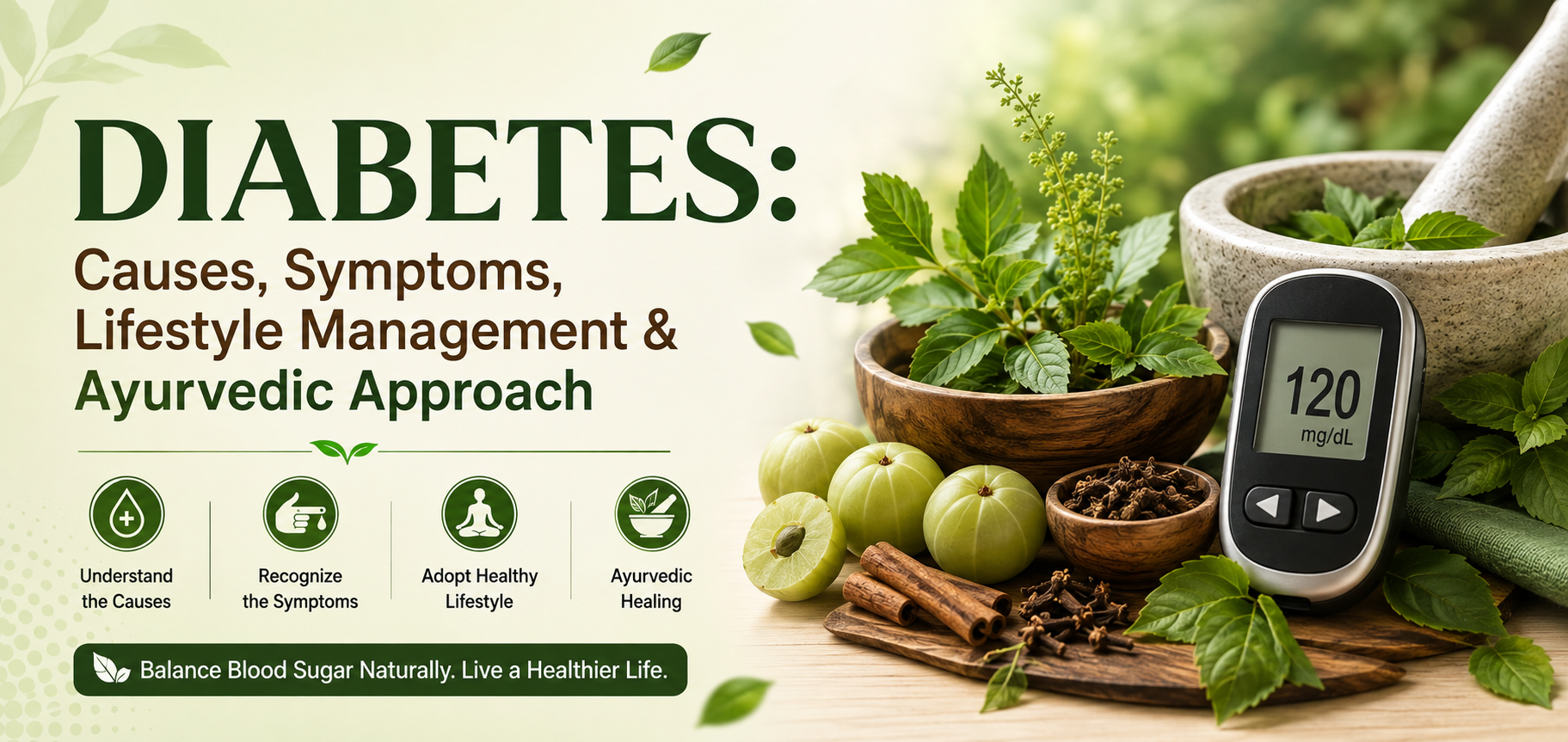
From an Ayurvedic perspective, maintaining a balanced lifestyle, healthy digestion, appropriate diet and regular daily routine can play an important role in supporting overall metabolic wellness. At Shree Nidhi Ayurveda, personalised Ayurvedic consultation focuses on understanding an individual's Prakriti, lifestyle, history and daily routine before suggesting a suitable care plan.
What Is Diabetes?
Diabetes is a chronic metabolic condition in which blood glucose, or blood sugar, becomes higher than normal. Glucose is an important source of energy for the body, while insulin helps glucose move from the bloodstream into cells.
There are different types of diabetes. Type 1 diabetes occurs when the body produces little or no insulin and requires insulin treatment. Type 2 diabetes is the most common form and is associated with insulin resistance and ineffective use of insulin. Gestational diabetes can develop during pregnancy.
Type 2 diabetes may develop gradually, and some people may have mild or no noticeable symptoms for years. This makes regular health check-ups particularly important.
Common Symptoms of Diabetes
Recognising possible symptoms early can encourage timely testing and professional evaluation. Common symptoms may include:
- Increased thirst
- Frequent urination
- Persistent tiredness
- Blurred vision
- Unexplained weight loss
- Increased hunger
- Slow healing of wounds
- Recurrent infections
Not everyone experiences obvious symptoms, particularly in the early stages of type 2 diabetes. Therefore, people with risk factors should discuss appropriate blood glucose testing with a qualified healthcare professional. WHO notes that early diagnosis through blood glucose testing can help reduce the risk of serious complications.
What Causes Diabetes?
Diabetes can develop due to a combination of genetic, metabolic and lifestyle factors. For type 2 diabetes, common risk factors include excess body weight, physical inactivity, unhealthy dietary patterns and family history.
A sedentary routine, frequent consumption of highly processed foods, excessive calories and inadequate physical activity can contribute to metabolic problems. Stress and poor sleep may also make it more difficult for some people to maintain healthy lifestyle habits.
However, diabetes is not caused by one factor alone. Individual risk varies, and a personalised assessment is important.
Diabetes and Ayurveda
Ayurveda takes a holistic approach to health and focuses on the relationship between diet, digestion, lifestyle, physical activity, sleep and overall balance.
Traditional Ayurvedic literature discusses metabolic disorders under different concepts, including Prameha. Ayurveda does not simply focus on reducing a single symptom; instead, an Ayurvedic practitioner may consider an individual's Prakriti, dietary habits, digestion, activity level and daily routine when developing a personalised wellness plan.
At Shree Nidhi Ayurveda, the approach is based on personalised Prakriti assessment and lifestyle guidance. The clinic also provides Ayurvedic consultation and Panchakarma-based therapies as part of its broader wellness services.
It is important to understand that Ayurvedic care should be considered as part of responsible diabetes management rather than as a replacement for prescribed diabetes treatment.
Ayurvedic Lifestyle Management for Diabetes
1. Focus on a Balanced Diet
Diet plays an important role in maintaining healthy blood glucose levels. A balanced eating pattern should generally include appropriate portions of vegetables, whole foods, fibre-rich foods and suitable sources of protein.
Limiting excessive consumption of sugary drinks, sweets, highly processed foods and foods high in unhealthy fats can support healthier dietary habits.
Instead of following extreme diets, choose a sustainable eating pattern that can be maintained over the long term.
2. Stay Physically Active
Regular physical activity is an important part of diabetes management. WHO recommends at least 150 minutes of moderate-intensity physical activity per week for prevention and management of type 2 diabetes, alongside other healthy lifestyle measures.
Walking, yoga, stretching and other suitable forms of exercise can be incorporated according to an individual's age, fitness level and health condition.
People with diabetes should choose an exercise routine appropriate for their medical situation and seek professional guidance when necessary.
3. Maintain a Healthy Weight
For people who are overweight, gradual and sustainable weight management may help reduce the risk of type 2 diabetes and improve metabolic health.
Rather than relying on quick-fix solutions, focus on consistent eating habits, physical activity, adequate sleep and a manageable daily routine.
4. Manage Stress
Long-term stress can make healthy lifestyle management more difficult. Practices such as breathing exercises, meditation and appropriately guided yoga may help support relaxation and overall wellbeing.
At Shree Nidhi Ayurveda, yoga guidance is integrated into suitable long-term wellness plans, alongside lifestyle and Ayurvedic consultation.
5. Follow a Consistent Daily Routine
Ayurveda places importance on maintaining a disciplined daily routine. Regular meal timings, adequate sleep, physical activity and mindful eating can help create healthier lifestyle patterns.
A routine should be practical rather than overly restrictive. Small, consistent changes are often easier to maintain than sudden lifestyle transformations.
Can Ayurveda Cure Diabetes?
Diabetes should not be described as a condition that can simply be “cured” through herbs, Panchakarma or any single therapy.
Some research has explored Ayurvedic preparations and complementary approaches for type 2 diabetes, but scientific evidence remains limited and varies by treatment. NCCIH also advises people not to replace proven diabetes treatment with unproven products or practices.
People taking diabetes medication should inform their healthcare providers about any herbs or supplements they use because certain products may interact with medicines or cause unwanted effects.
Therefore, the safest approach is to combine appropriate medical care, regular blood glucose monitoring and healthy lifestyle practices with complementary Ayurvedic guidance when suitable.
Importance of Regular Diabetes Monitoring
Managing diabetes is more than simply checking blood sugar occasionally. Regular monitoring and medical follow-up can help identify changes early and reduce the risk of complications.
Depending on individual needs, healthcare professionals may recommend monitoring blood glucose, HbA1c, blood pressure, cholesterol, kidney function, eye health and foot health.
Diabetes can increase the risk of complications involving the heart, kidneys, eyes and nerves. WHO recommends regular screening and appropriate treatment to help prevent or delay these complications.
When Should You Consult a Professional?
If you experience persistent thirst, frequent urination, unexplained weight loss, unusual fatigue or blurred vision, consult a qualified healthcare professional and consider appropriate testing.
People who already have diabetes should not stop or change prescribed medication without medical advice. If you are interested in Ayurvedic treatment or herbal products, discuss them with both your diabetes-care provider and a qualified Ayurvedic practitioner.
At Shree Nidhi Ayurveda, consultations are designed around the individual's history, Prakriti, lifestyle and health goals. The clinic is led by Dr. Archana Goel, BAMS, MD (BHU), Gold Medalist, and provides Ayurvedic consultation, Panchakarma and lifestyle-oriented care in Vasundhara Enclave, Delhi.
Conclusion
Diabetes requires consistent, long-term attention rather than a temporary approach. A balanced diet, regular physical activity, healthy weight, adequate sleep, stress management and regular health monitoring can all contribute to better diabetes management.
Ayurveda can provide a personalised lifestyle and wellness perspective by considering diet, daily routine, digestion, activity and individual constitution. However, it should be used responsibly and should not replace medically necessary diabetes treatment.
If you are looking for personalised Ayurvedic guidance for diabetes and lifestyle management, a professional consultation can help you understand which lifestyle changes may be appropriate for your individual needs.