Modern lifestyles can often make these hormonal concerns more difficult to manage. Long working hours, poor sleep, chronic stress, sedentary habits and an unbalanced diet may all affect metabolic and hormonal health.
Ayurveda takes a personalised approach to such concerns. Instead of focusing only on one symptom, Ayurvedic care looks at an individual's constitution, digestion, lifestyle, daily routine and overall balance. This approach is also consistent with Shree Nidhi Ayurveda's emphasis on Prakriti-based assessment, lifestyle guidance and root-cause-oriented care.
What Is PCOD and PCOS?
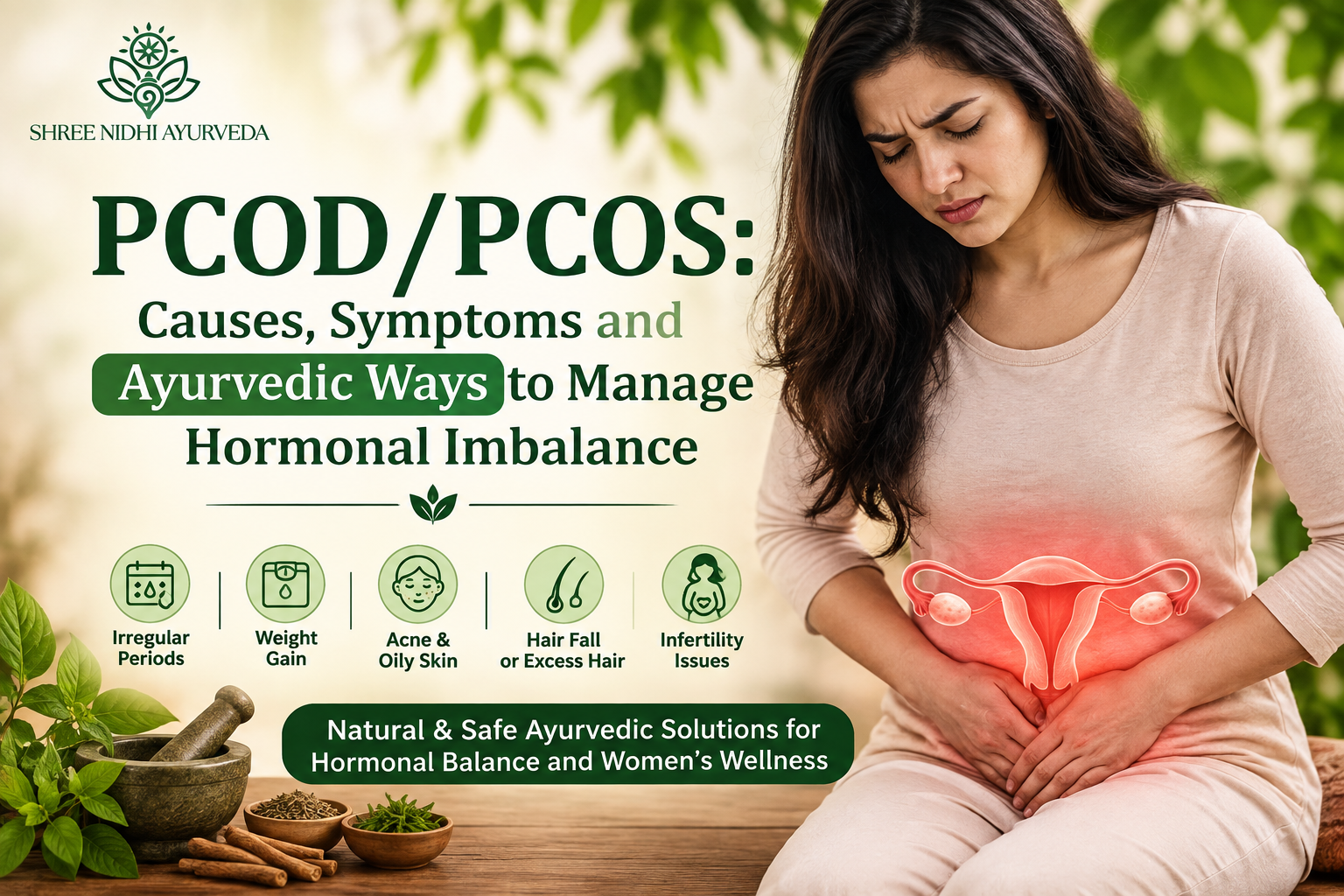
PCOD, or Polycystic Ovarian Disease, is a hormonal condition in which the ovaries may produce immature or partially mature eggs. This can sometimes contribute to irregular menstrual cycles, hormonal fluctuations and other symptoms.
PCOS, or Polycystic Ovary Syndrome, is a broader hormonal and metabolic condition. It can involve irregular ovulation, higher levels of androgen hormones and metabolic concerns such as insulin resistance.
Although the terms PCOD and PCOS are often used interchangeably, they are not identical. A proper medical evaluation is important before deciding on a treatment or management approach.
Common Symptoms of PCOD and PCOS
Symptoms can vary significantly from one woman to another. Some women may experience only mild changes, while others may have several symptoms at the same time.
Common symptoms include:
- Irregular or missed periods
- Heavy or prolonged menstrual bleeding
- Acne and oily skin
- Unwanted facial or body hair
- Hair thinning or hair loss
- Weight gain or difficulty losing weight
- Mood changes
- Increased fatigue
- Difficulty with ovulation or conception
Not every woman with PCOS will have all these symptoms. This is why personalised assessment is important rather than following the same treatment plan as someone else.
What Causes PCOD and PCOS?
There is no single cause behind PCOD or PCOS. Hormonal, genetic, metabolic and lifestyle factors can all play a role.
Insulin resistance, for example, can affect the way the body manages blood sugar and may contribute to increased androgen activity in some women. Weight changes, stress, inadequate sleep and physical inactivity can also influence metabolic and hormonal health.
From an Ayurvedic perspective, maintaining balance in digestion, metabolism, daily routine and the body's functional energies is an important part of overall wellbeing. At Shree Nidhi Ayurveda, treatment plans are described as being based on an individual's Prakriti, lifestyle and health history rather than symptoms alone.
PCOD Treatment in Ayurveda: A Personalised Approach
There is no single Ayurvedic formula that is appropriate for every woman with PCOD. PCOD treatment in Ayurveda is generally individualised according to symptoms, constitution, lifestyle, digestion and other health factors.
The first step should be a detailed consultation rather than self-prescribing herbs or therapies. Depending on the individual, an Ayurvedic practitioner may focus on improving dietary habits, establishing a consistent daily routine, supporting healthy digestion and encouraging appropriate physical activity.
The objective is to create sustainable lifestyle habits rather than rely on quick fixes.
PCOS Treatment in Ayurveda and Lifestyle Management
When discussing PCOS treatment in Ayurveda, lifestyle management deserves special attention. Hormonal health is closely connected with everyday habits, including food, movement, sleep and stress management.
A practical routine may include:
Eat a Balanced Diet
Regular meals containing vegetables, whole grains, protein sources, healthy fats and fibre can support overall metabolic health. Highly processed foods and excessive sugary foods should be limited.
Instead of following an extremely restrictive diet, focus on meals that are nutritious, satisfying and realistic enough to maintain over the long term.
Stay Physically Active
Regular movement can be helpful for overall metabolic health. Walking, yoga, strength exercises or other enjoyable forms of physical activity can be incorporated according to individual fitness levels.
Prioritise Sleep
Poor sleep can affect energy, appetite, stress levels and daily routine. Maintaining consistent sleep and waking times can be a simple but valuable lifestyle change.
Manage Stress
Stress is a normal part of life, but prolonged stress can affect overall wellbeing. Breathing exercises, meditation, yoga, adequate rest and enjoyable hobbies can help create a healthier daily rhythm.
Ayurvedic Treatment for PCOS: What May Be Considered?
Ayurvedic treatment for PCOS should always be personalised and guided by a qualified practitioner. Depending on an individual's health assessment, Ayurvedic care may include dietary recommendations, lifestyle correction, yoga and selected therapies.
Shree Nidhi Ayurveda provides personalised Prakriti-based consultation and offers classical Panchakarma therapies at its Delhi clinic. The clinic also integrates yoga guidance into long-term care plans.
Panchakarma is a specialised Ayurvedic therapeutic approach and should not be undertaken simply because someone has PCOS. Whether a particular therapy is appropriate depends on the person's individual condition and professional assessment.
Women should also avoid taking Ayurvedic medicines or herbal preparations on their own simply because they are marketed as "natural." Natural does not automatically mean suitable for everyone.
Ayurvedic Treatment for PCOD: Supporting Better Daily Habits
Ayurvedic treatment for PCOD can include a broader focus on daily routine and sustainable lifestyle changes.
Ayurveda traditionally places importance on regular meals, proper sleep, appropriate exercise, digestion and maintaining a balanced routine. These principles can be particularly useful when hormonal concerns are accompanied by weight changes, stress or irregular daily habits.
Rather than expecting results overnight, women should focus on gradual improvements. A consistent routine maintained for months is generally more realistic than following a strict plan for a few days and then abandoning it.
Natural Treatment for PCOS: What Should You Know?
Many women search for a natural treatment for PCOS because they want to manage their symptoms through lifestyle and traditional approaches. However, PCOS is a complex condition, and "natural" should not be confused with a guaranteed cure.
A sensible natural approach may involve:
- Eating a balanced, nutrient-rich diet
- Maintaining a healthy level of physical activity
- Getting adequate sleep
- Managing stress
- Maintaining a healthy weight where appropriate
- Following professional medical or Ayurvedic guidance
- Monitoring menstrual and other symptoms
If periods become very irregular, symptoms suddenly worsen, or pregnancy is a concern, consulting a qualified healthcare professional is important.
Can PCOD and PCOS Be Managed Naturally?
PCOD and PCOS management is usually a long-term process. Some women notice improvements in their menstrual cycles, energy, weight management or other symptoms after making consistent lifestyle changes, while others may require additional medical care.
The important thing is to avoid comparing your journey with someone else's. PCOS can look very different from one person to another.
An individualised approach can help identify the lifestyle factors and symptoms that deserve attention and create a practical plan that fits the person's routine.
When Should You Consult an Ayurvedic Practitioner?
If you regularly experience irregular periods, persistent acne, unwanted hair growth, unexplained weight changes or concerns related to fertility, it is worth getting an appropriate evaluation.
An Ayurvedic consultation can be considered as part of a personalised wellness and symptom-management approach. At Shree Nidhi Ayurveda, consultations begin with understanding the individual's history, lifestyle and Prakriti before suggesting care.
For women in Delhi looking for personalised Ayurvedic guidance, Shree Nidhi Ayurveda is located in Vasundhara Enclave and provides Ayurvedic consultation, Panchakarma and lifestyle-focused care.
Conclusion
PCOD and PCOS are more than just irregular periods. They can affect hormones, metabolism, skin, weight, emotional wellbeing and fertility. The good news is that many aspects of hormonal and metabolic health can be supported through consistent lifestyle changes and appropriate professional care.
An Ayurvedic approach focuses on the individual rather than treating every woman in exactly the same way. Whether you are exploring PCOD treatment in Ayurveda, considering PCOS treatment in Ayurveda, or looking for a natural treatment for PCOS, the right approach should be personalised and guided by a qualified practitioner.
Instead of looking for a quick cure, focus on understanding your body, improving your daily habits and seeking professional guidance when needed. With consistency and the right support, managing PCOD or PCOS can become a more structured and sustainable part of your overall health journey.
Frequently Asked Questions (FAQs)
1. What is the difference between PCOD and PCOS?
PCOD is a hormonal condition in which the ovaries may release immature eggs, while PCOS is a broader hormonal and metabolic disorder that can affect ovulation, androgen levels and metabolism. Although they share some symptoms, they are not exactly the same.
2. Can PCOD be managed with Ayurveda?
Yes, an individualised Ayurvedic treatment for PCOD may focus on diet, daily routine, physical activity, stress management and other Ayurvedic therapies. The appropriate approach depends on the individual's symptoms, constitution and overall health.
3. Is Ayurvedic treatment for PCOS suitable for everyone?
An Ayurvedic treatment for PCOS should be personalised rather than self-prescribed. A qualified Ayurvedic practitioner can assess your health history, lifestyle and individual requirements before recommending dietary changes, therapies or medicines.
4. Can lifestyle changes help manage PCOS naturally?
Lifestyle changes such as eating a balanced diet, staying physically active, getting adequate sleep and managing stress can support overall hormonal and metabolic health. These measures may form part of a natural treatment for PCOS, but they should not be considered a guaranteed cure.
5. When should I consult an Ayurvedic doctor for PCOD or PCOS?
You should consider professional guidance if you experience persistent irregular periods, unexplained weight changes, acne, excessive hair growth, hair loss or fertility concerns. A personalised consultation can help determine an appropriate approach to PCOD treatment in Ayurveda or PCOS treatment in Ayurveda.